contact@girwildlifesanctuary.in
+91-9821579005 | +91-9821579005
 Evolution of Gir National Park:
Before becoming a national park, Gir National Park was just a private hunting reserve for the Nawab of Junagadh. In the 20th century, when there were only 15-20 lions left in India, the lion population got very low due to uncontrolled hunting and deforestation. The Nawab of Junagarh declared it as its Protected Hunting Reserve. They take strict action on lion hunting. The lion and habitat protection announced it as a wildlife sanctuary in 1965. It was finally established as a national park in 1975.
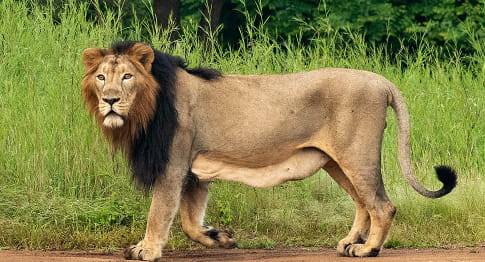
Best Environment for Asiatic Lions:The environment and landscape of the Gir National Park are perfect for this species. You can find here the teak trees and bushes, as the forest of Gir National Park is dry and autumnal. This type of environment is a great place to protect, hunt, and stay with lions. Attract the prey-type animals like sambhar deer and nilgai around a small meadow, which helps the lion to easily find these types of animals to prey on, and when prey is easily available, lion populations also thrive.
Success Story of Gir:When the population of lions rapidly disappeared due to uncontrolled hunting and deforestation in the 20th century, strict action was taken against the hunting of lions in this area. If the Nawab had not taken this step at that time, then today their existence would be nonexistent. Asiatic lions would be in India forever. After that, Gir National Park took on the status of a wildlife sanctuary in 1965 so that the wildlife here could get legal protection and, in 1975, became an officially designated national park. After that, no interference from any humans in the forest area.
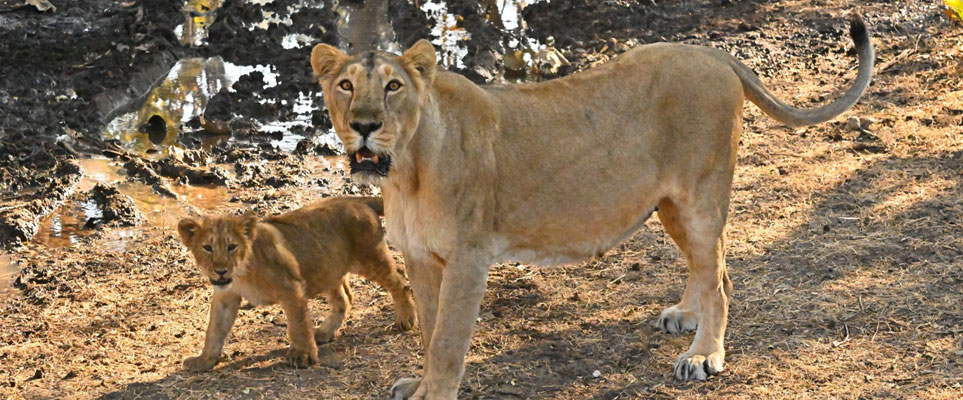
The right way for lion visibility:Wild animals do not like to stand in one place, like in a park or zoo; hence, the right methods have to be adopted smartly to see them. * Choose the early morning safari; lions are hunted at night, and in the early morning, between 6 and 9 am, they either wander the roads or come to drink water when tired. Early in the morning, by looking at the fresh foot marks of the lion on the soil, it is estimated in which direction the lion has gone. In the hot afternoon sun, they sleep behind bushes, which greatly reduces visibility. * When a lion emerges from the jungle, the chital, langur, and sambhar deer, out of fear, emit a distinctive sound known as an alarm call. Their calls are followed by gypsy drivers who follow them to the lion. * In the summer season between March and June, the forest dries up, and all the leaves fall off. This makes it easy to see that with high visibility, lions become thirsty and flock to artificially created water holes. * The Gir Jungle Trail has 13 different routes. The Forestry Department assigns a separate route to each gypsy so that they can have equal access to all areas and view the lions comfortably.
These efforts and the unique shrubby forest, the lion population in Gir has grown from 20-30 to over 600 today. And this is why Gir National Park is known as the official home of the Asiatic Lions.