contact@girwildlifesanctuary.in
+91-9821579005 | +91-9821579005
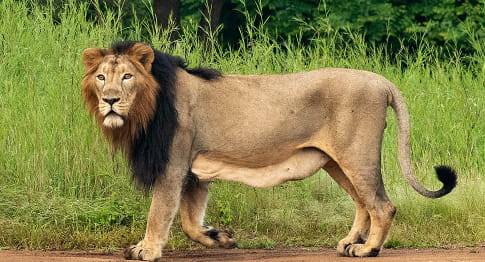
Gir National Park: A Global Wildlife Conservation Success Story The latest estimates from 2026 confirm the continued significant growth of the Asiatic lion population, establishing Gir as the only wild home of this iconic feline species in the world. We are grateful for this success, but it has brought new challenges and opportunities.
With more lions, there is more pressure on habitat availability, interactions with local communities, and the need for sustainable conservation strategies. These conservation complexities add to the significance of the visit of those coming for a wildlife adventure in the form of a Gir safari tour and further fuel their support for the protection of the Asiatic lion not merely as a species but as part of a delicate ecosystem in which lions and humans live together.
By 1911 the population of the Asiatic lion had dropped to a mere 20 animals. Through conservation policies and protections, the population has recovered impressively, a remarkable success in wildlife conservation. With the participation of the local community and strict efforts, one can see hundreds of Asiatic lions roaming in the Gir National Park and its neighboring habitat today. Today, through the Gir safari tour, Gir National Park is one of the top ecotourism destinations in the world and attracts tourists and photographers from all over the world. But numbers alone do not guarantee long-term survival.
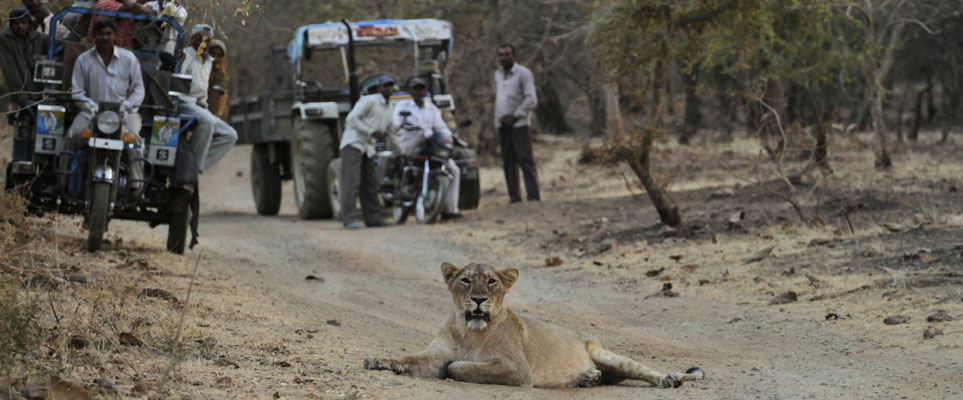
With the increase in the lion population, they move out of the protected Gir National Park into the adjacent forest areas, agricultural land and villages. With the increase in the lion population, they move out of the protected Gir National Park into the adjacent forest areas, agricultural land, and villages. This expansion brings with it a number of conservation issues: ● More territorial disputes. ● Greater risk of road and rail accidents ● Increasing human-lion conflicts in rural villages ● Increased pressure on prey base ● Higher risk of outbreak of an epidemic that could threaten the entire lion population This requires close monitoring and good management based on wildlife science.
The growing lion population has revealed space constraints at Gir, which has led to capacity constraints. Translocations to other adjoining forest divisions and protected areas have been well established and successful. However, increasing the space for lions is essential. The habitat enhancement techniques will provide space for the species. The establishment of habitat corridors linking isolated forest patches and protected areas to enable lions to move around to reduce competition over territories would maintain the genetic variability of the population. Also habitat enhancement and prey density are increased by restoring grass cover, protecting water sources etc. Conservation agencies have done this. When each component of the ecosystem remains healthy, lions continue to thrive naturally.
However, exploring Gir National Park entails so much more than getting the thrill of seeing the Asiatic lion. You're in fact experiencing India’s success story in conservation. Every safari you take directly helps to support conservation, wildlife, the local economy, and sustainable travel that does good for everyone involved.
While Gir’s impressive numbers are a testament to successful conservation efforts, they underscore the need for vigilance. Continued habitat management, disease control, community outreach, research and scientific monitoring, and responsible tourism all play critical roles in the survival of the Asiatic lion. With Gir as the only wild abode of the Asiatic lion on the planet, it holds a universal conservation responsibility. It’s a responsibility shared by each visitor, conservationist, and member of the local community, a commitment to ensuring the health of this unique ecosystem for the generations to come. A well-planned Gir jeep safari tour offers not only indelible wildlife memories but also becomes an integral part of conserving one of India’s most treasured natural assets.